Tarot basics
The four tarot suits and their elements
A tarot deck has four suits, each linked to an element and an area of life. Knowing them helps you read a spread at a glance.
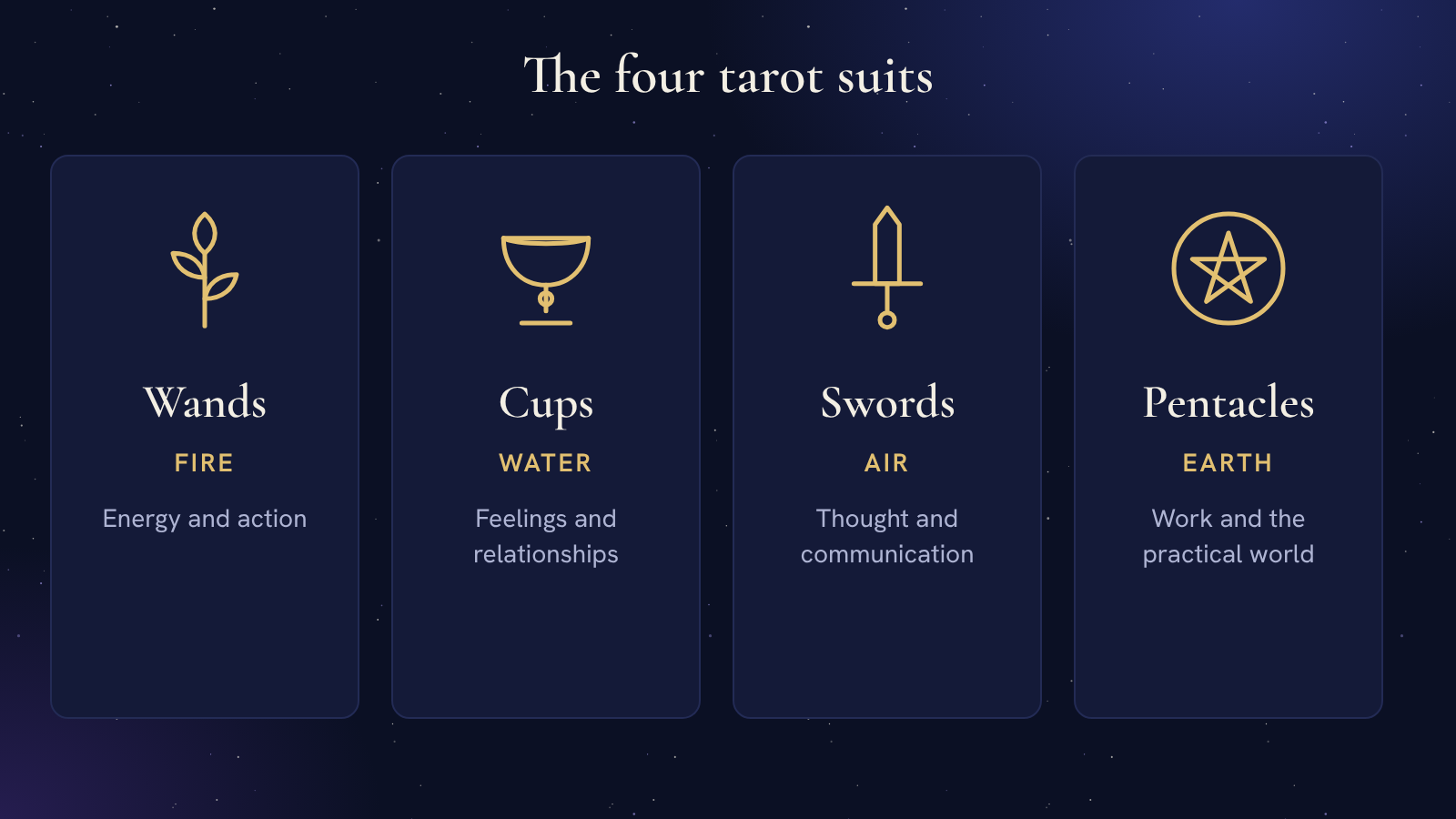
The minor arcana of a tarot deck is divided into four suits: wands, cups, swords and pentacles. Each suit has fourteen cards, and each is traditionally linked to an element and a broad area of life. Knowing the suits gives you a way into the 56 minor cards before you learn them one by one.
Wands: fire
Wands are linked with fire, and with energy, drive and action. Wands cards often speak about enthusiasm, ambition, creativity and the way you spend your effort. A spread full of wands might suggest a lot is in motion, or that you are being asked what you want to put your energy into. Some decks call this suit rods, staves or batons.
Cups: water
Cups belong to water, and to feelings and relationships. They cover love, friendship, family, intuition, nostalgia and emotional life in general. Many readers turn to cups when a question is about how things feel rather than what to do.
Swords: air
Swords are linked with air, and with thought and communication. They deal with ideas, decisions, honesty, conflict and clarity. Swords have a reputation for being the hardest suit, because many of the cards show strain or struggle. A better way to see them is as the suit of the mind at work: sometimes sharp, sometimes tired, often useful.
Pentacles: earth
Pentacles correspond to earth, and to work and the practical world. Expect themes of money, craft, health habits in the everyday sense, home, resources and long-term effort. Some decks call this suit coins or disks.
A note on the elements
The pairing of suits with elements is a convention built up over time, and it is not universal. Some traditions, and some decks, assign the elements differently, for example swapping wands and swords. The set above is the most common in English-language tarot and is the one used throughout this guide. If your deck's guidebook says otherwise, follow your deck.
How suits shape a spread
When you lay out a spread, a quick look at the suits can give you a first impression before you read a single card.
- A dominant suit. Four or five cards from one suit often point to the theme of the reading: mostly cups for a question that is really about feelings, mostly swords for one caught up in thought.
- A missing suit. If one suit does not appear at all, you might ask whether that area is being overlooked, though it can also just be chance.
- Mixed suits. Where the suits clash, such as a wands card next to a cups card, it can show energy and emotion pulling in different directions.
- Many majors. If most of the cards are major arcana, many readers take it as a sign that the question touches on bigger themes.
Treat these as starting points for a conversation with the cards, not rules. A dominant suit is an observation, not a result.
Learning the suits
A good way to learn is to take one suit at a time and read Ace to Ten, then the four court cards. Within each suit, the numbers follow a rough story: the Ace is a seed, the middle cards are the working-through, and the Ten is a point of completion, sometimes with a cost. That shared pattern is why learning the numbers once helps with every suit.
Tarot has no demonstrated ability to predict events. Readings are for entertainment and reflection only, and they aren't medical, legal or financial advice.
Where to go next
For the bigger picture, read major and minor arcana in tarot explained, then start on the suit that appeals most, such as Ace to Five of Wands. When you have a spread in front of you, you can photograph it and have it read.