Tarot spreads
The three-card tarot spread
The three-card tarot spread is a flexible layout that can tell a story over time or frame a choice. Here are two ways to read it.
The three-card tarot spread is the most flexible layout in tarot. Three cards sit side by side, and the meaning comes from what each position asks and how the cards speak to one another. It is simple enough for a beginner and useful enough that experienced readers return to it for everyday questions.
The classic frame: past, present, next
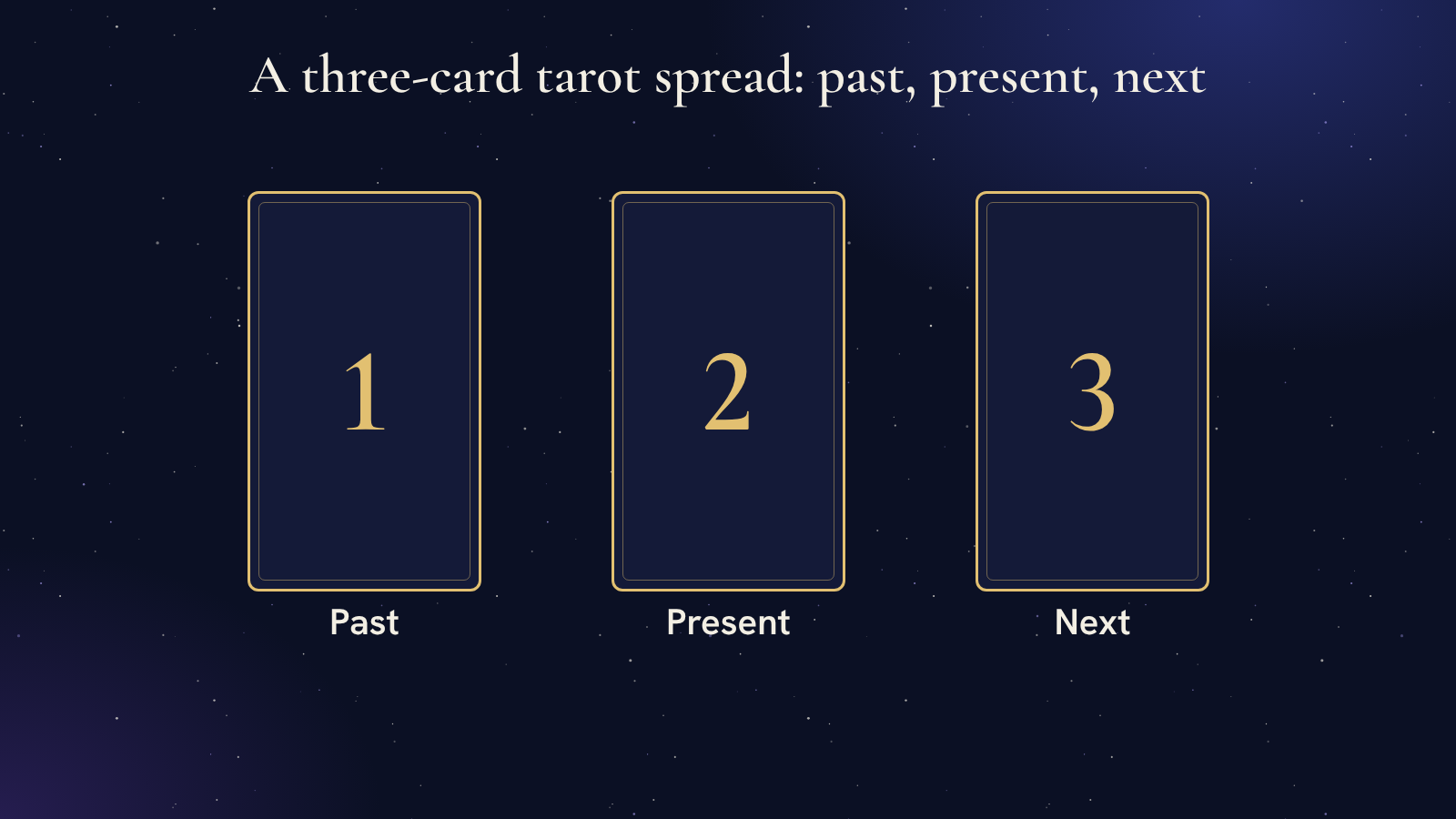
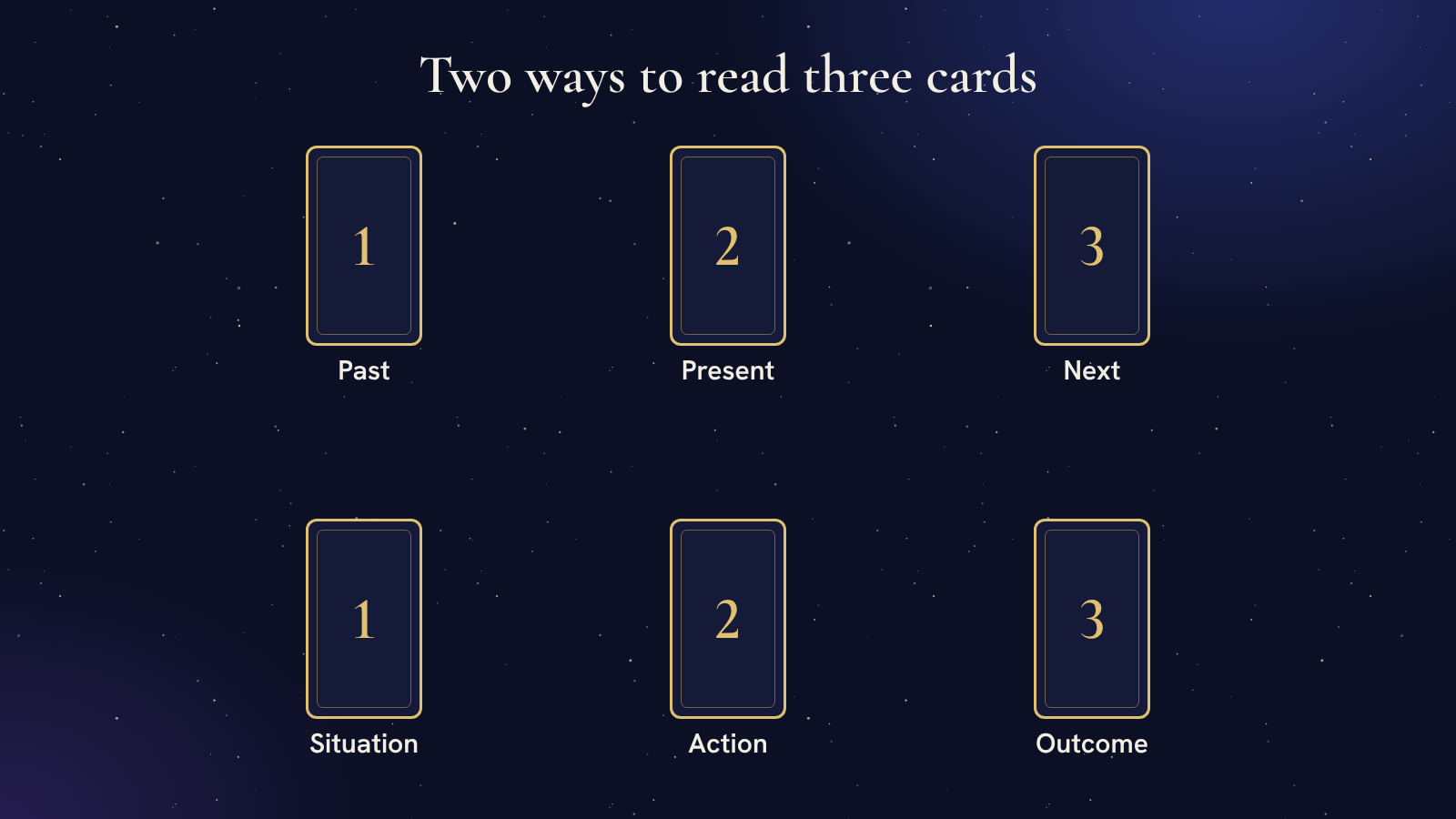
The most familiar version reads left to right. Card 1 is the past, card 2 is the present and card 3 is what comes next. Many readers prefer to call the last position "next" rather than "future", because it points to where current momentum may lead, not to a fixed event.
- Past (1): background and influences that shaped the situation.
- Present (2): where things stand now, and what is most active.
- Next (3): a direction to consider if things carry on as they are.
A second frame: situation, action, outcome
The same three places can ask different questions. In this frame, card 1 is the situation, card 2 is the action you might take and card 3 is the outcome that could follow. It suits questions about choices, such as whether to speak up in a meeting or how to approach a difficult conversation.
The difference matters. The first frame describes a story unfolding over time. The second is practical: it gives you something to try and a way to think about the result.
How to lay and read it
- Pick a frame and a question. Say it out loud or write it down before you shuffle.
- Shuffle and draw three. Place them face up, left to right, in the order drawn.
- Read each card in its position. Ask what the card shows, then what that means for the position it sits in.
- Read the line. Look at how the three connect. Does the second card answer the first? Does the third resolve, repeat or contrast with what came before?
Reading the story across three cards
Pay attention to patterns. Three cards of the same suit suggest one area of life is carrying the question. A run of major arcana cards often points to something that feels significant to the person asking. A mix of suits can show a situation touching several areas at once.
Try summing up the spread in one sentence: "I came from this, I am here, and this is where I may be heading." If the sentence comes easily, the reading is probably hanging together. If it doesn't, return to the card that feels least clear and look at its position again.
Other uses for three cards
Three cards also work for mind, body and spirit, for a pros and cons check, or for a quick daily story: morning, afternoon and evening. The positions are yours to define, provided you decide them before drawing. Keeping them fixed once the cards are down stops you from reshaping the question to fit the answer.
Tarot has no demonstrated ability to predict events. Readings are for entertainment and reflection only, and they aren't medical, legal or financial advice.
Where to go next
If a single card feels too thin, you are already in the right place. If three feels too small, try the horseshoe tarot spread, or read how to read a tarot spread, step by step for a method that works with any layout. Once your three cards are on the table, you can photograph the spread and have it read card by card.