Tarot basics
What is a tarot spread?
A tarot spread is a set of cards laid out in a pattern, where each position in the pattern asks its own question.
If you have ever seen tarot cards laid out on a table in rows, crosses or arcs, you have seen a tarot spread. The cards are not placed at random. Each spot has a meaning, and the card that lands there is read in light of it.
Cards, positions and a question
A tarot spread has three parts. There are the cards themselves, which come from a 78-card deck. There is the layout, which sets how many cards you draw and where each one goes. And there is the question, which is whatever you want to think about while you read.
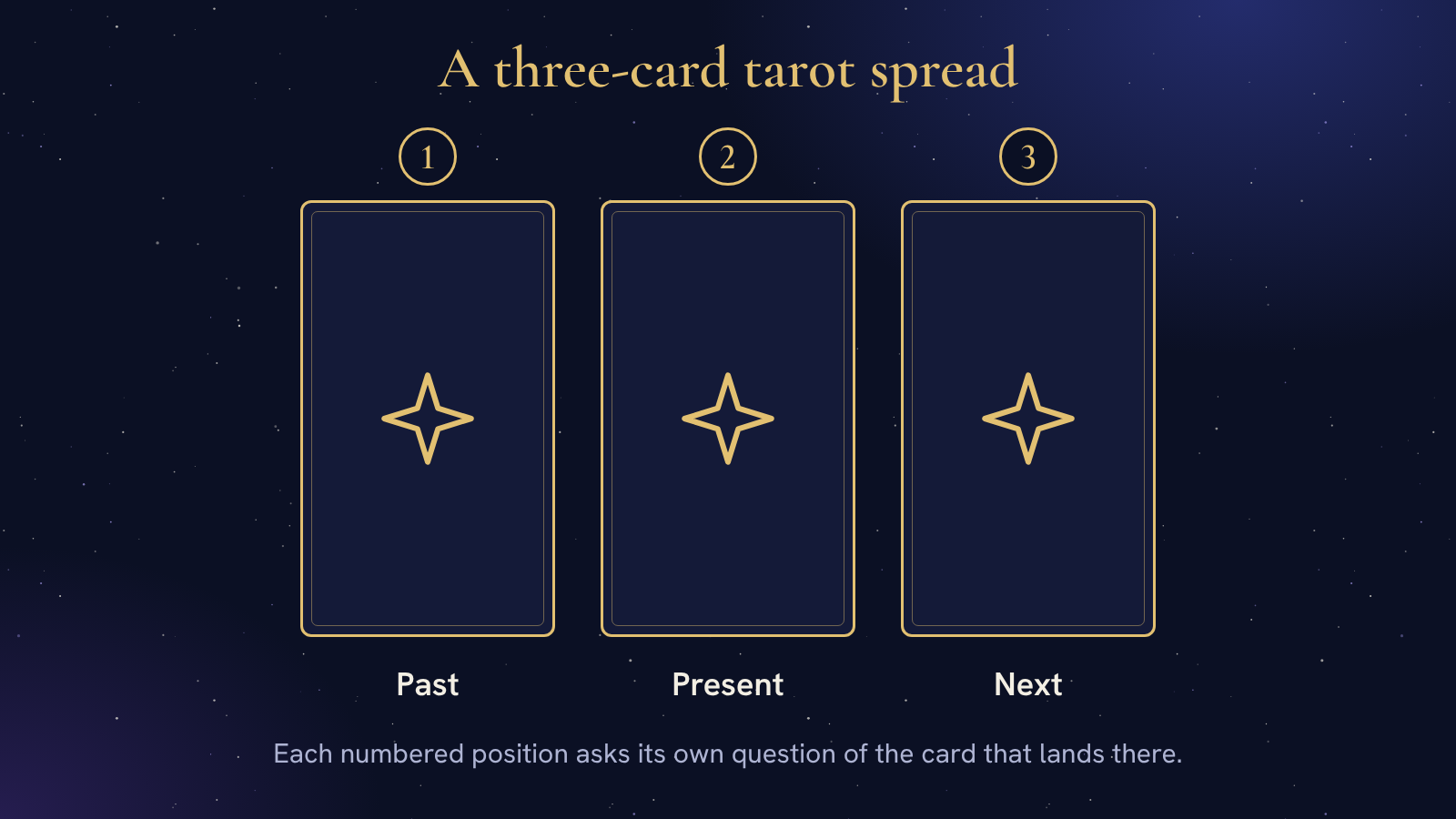
The layout is what turns a pile of cards into something readable. In a three-card spread, for example, the first position might stand for the past, the second for the present and the third for what could come next. The same card means something different in each of those places.
How a spread differs from a single draw
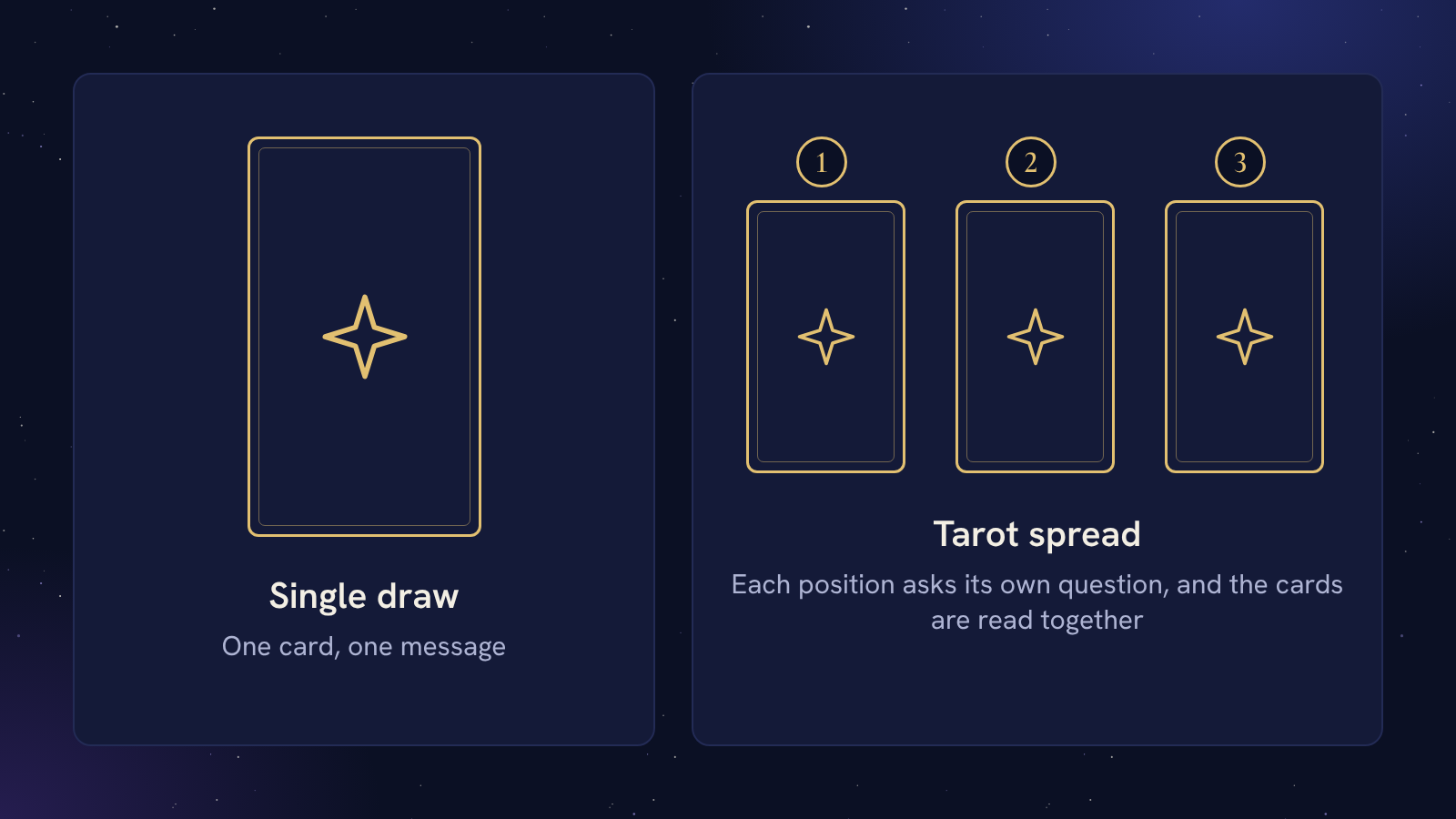
Drawing one card is the simplest way to use tarot. You ask a question, turn over a card and think about what it suggests. It is quick and works well for a daily check-in.
A spread adds structure. Because each position has its own job, you get several angles on the same question instead of one. The cards also talk to each other: a hopeful card beside a cautious one tells a different story from either card on its own.
Why position matters
Position is the main reason spreads exist. Take The Tower, a card often linked with sudden change. In a position about the past, it can point to something that has already shifted. In a position about advice, it asks a different question altogether. Reading the card without its position is like reading a word without its sentence.
Positions also keep a reading honest. Because the layout is chosen before the cards are turned, you can't bend the meaning to fit what you hoped to see.
Spreads you will come across
- One card: a single draw for a quick thought or daily theme.
- Three cards: the most common spread, often past, present and future, or situation, action and outcome.
- Celtic Cross: ten cards that give a detailed picture of one situation.
- Horseshoe: seven cards arranged in an arch.
- Freeform layouts: patterns a reader invents for a particular question.
Over the coming weeks, this section will take each of these apart, one spread at a time, along with the meaning of every card.
What a tarot spread can and can't do
Tarot is a tool for reflection. A spread gives you a set of prompts and images to think with, and many people find that useful for sorting out their own thoughts. It can't predict the future, and it isn't a substitute for advice from a doctor, lawyer or financial adviser.
Reading your own tarot spread
Once you have laid out a spread, the next step is working out what each card says in its position. If you would like a clear starting point, you can photograph your spread and have it read card by card.