Tarot spreads
Celtic Cross tarot spread positions, one by one
Each of the ten Celtic Cross positions asks a different question. This guide goes through them in order, with a tip for each.
In a Celtic Cross tarot spread, every card has a job. Knowing what each of the ten positions asks is what turns ten separate cards into one reading. This guide goes through them in order, with a tip for each. If you want the overall shape first, see the Celtic Cross tarot spread explained.
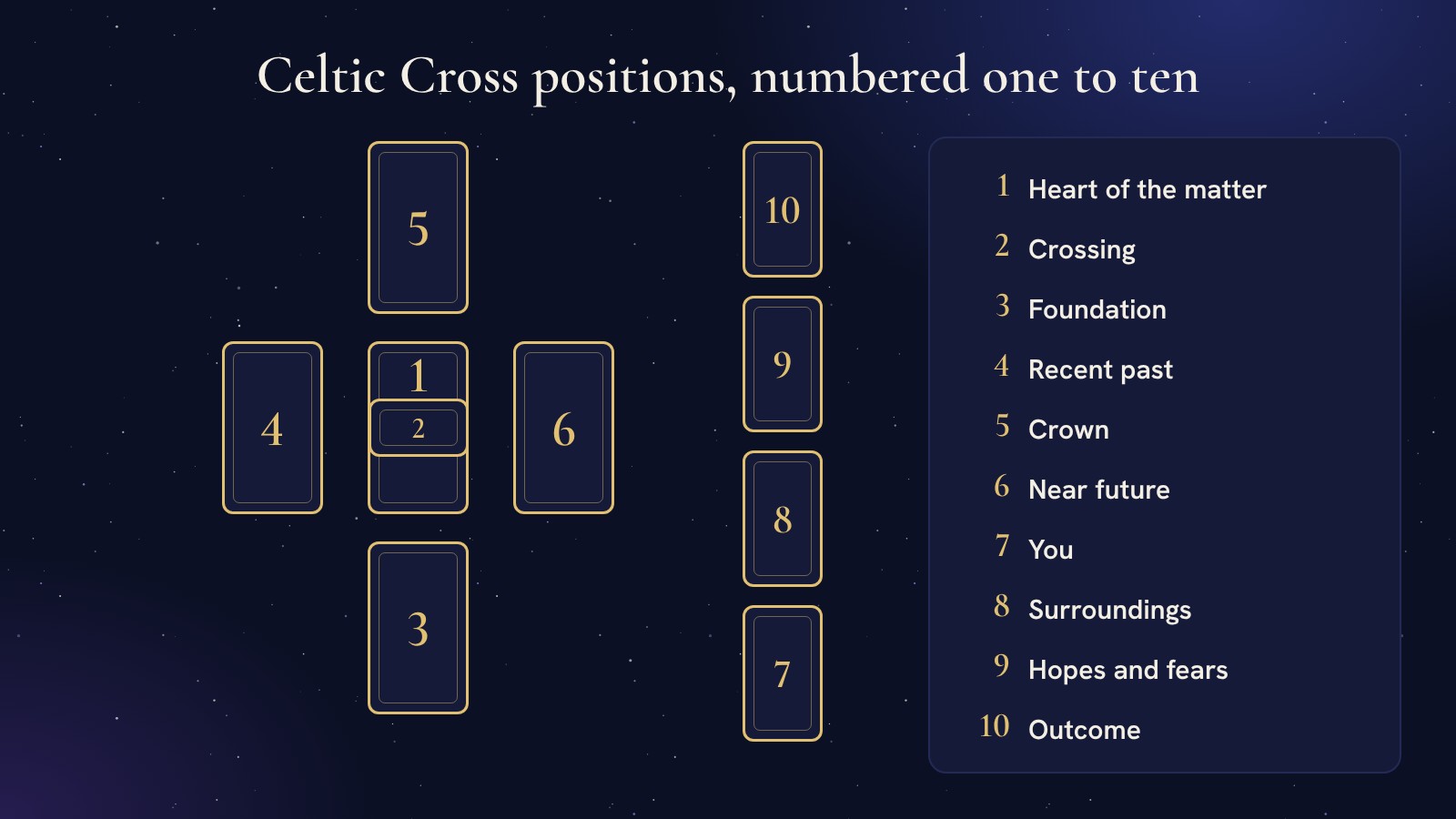
Names for the positions vary a little between books and readers. These are the ones used here, and they are a sound starting point.
The cross: cards 1 to 6
1. Heart of the matter
The centre card names what the situation is really about. Read it as the core theme, not the whole story.
2. Crossing (the challenge)
Laid across card 1, this shows what complicates or opposes it. Some readers treat it as a helpful friction, not simply a problem. The card need not be a bad one; many readers treat it as the part of the story that makes it interesting.
3. Foundation (the root)
Below the centre, this card points to the underlying cause or the ground the situation grew from. It often relates to things that are not obvious on the surface.
4. Recent past
On the left, this shows what has just passed, or is passing out of view. It is the nearest chapter to the present.
5. Crown (goal or best aim)
Above the centre, this is what you are reaching for, or the best outcome you can see. It can also be what you are conscious of aiming at.
6. Near future
On the right, this suggests what is coming into view soon. Treat it as a direction of travel, not a scheduled event.
The staff: cards 7 to 10
7. You (your approach)
The bottom card of the staff is about how you are meeting the situation: your attitude, stance or habits.
8. Surroundings (outside influences)
This card reflects the people, circumstances or expectations around you. It may describe support, pressure or simply the environment.
9. Hopes and fears
Often the most telling card. Hopes and fears can be the same thing, since what we want most is often what we worry about losing. Ask what the card suggests you are wishing for and what you are wary of.
10. Outcome (where it may head)
The top card shows where things may lead if the pattern continues. It is not a verdict. Treat it as something to consider alongside the rest of the spread.
Tips for reading the positions
- Read 1 and 2 together. The challenge only makes sense against the heart of the matter.
- Compare 5 and 10. If your aim and the outcome match, the path looks aligned. If they differ, ask what sits between them.
- Check 7 against 9. Your approach and your hopes and fears often explain each other.
- Notice the gaps. A position that feels blank can be a prompt in itself. Ask what you were expecting to see.
Tarot has no demonstrated ability to predict events. Readings are for entertainment and reflection only, and they aren't medical, legal or financial advice.
Where to go next
For a shorter layout with a similar arc, try the horseshoe tarot spread. To see how a card's meaning shifts with its place, read tarot card positions and what they change. With your ten cards down, you can photograph the spread and have it read.