Tarot basics
Tarot card positions and what they change
Where a card lands in a tarot spread decides which question it answers, so the same card can read differently each time.
The same tarot card can say different things depending on where it lands. That is the idea behind positions in a tarot spread: each spot in the layout asks its own question, and the card that falls there is read as an answer to it.
What a position is
A position is a named place in a spread. A three-card spread might have positions called past, present and next. A Celtic Cross has ten, such as the heart of the matter, what crosses it, and likely outcomes. The layout assigns the names before any card is turned. The cards then fill the places.
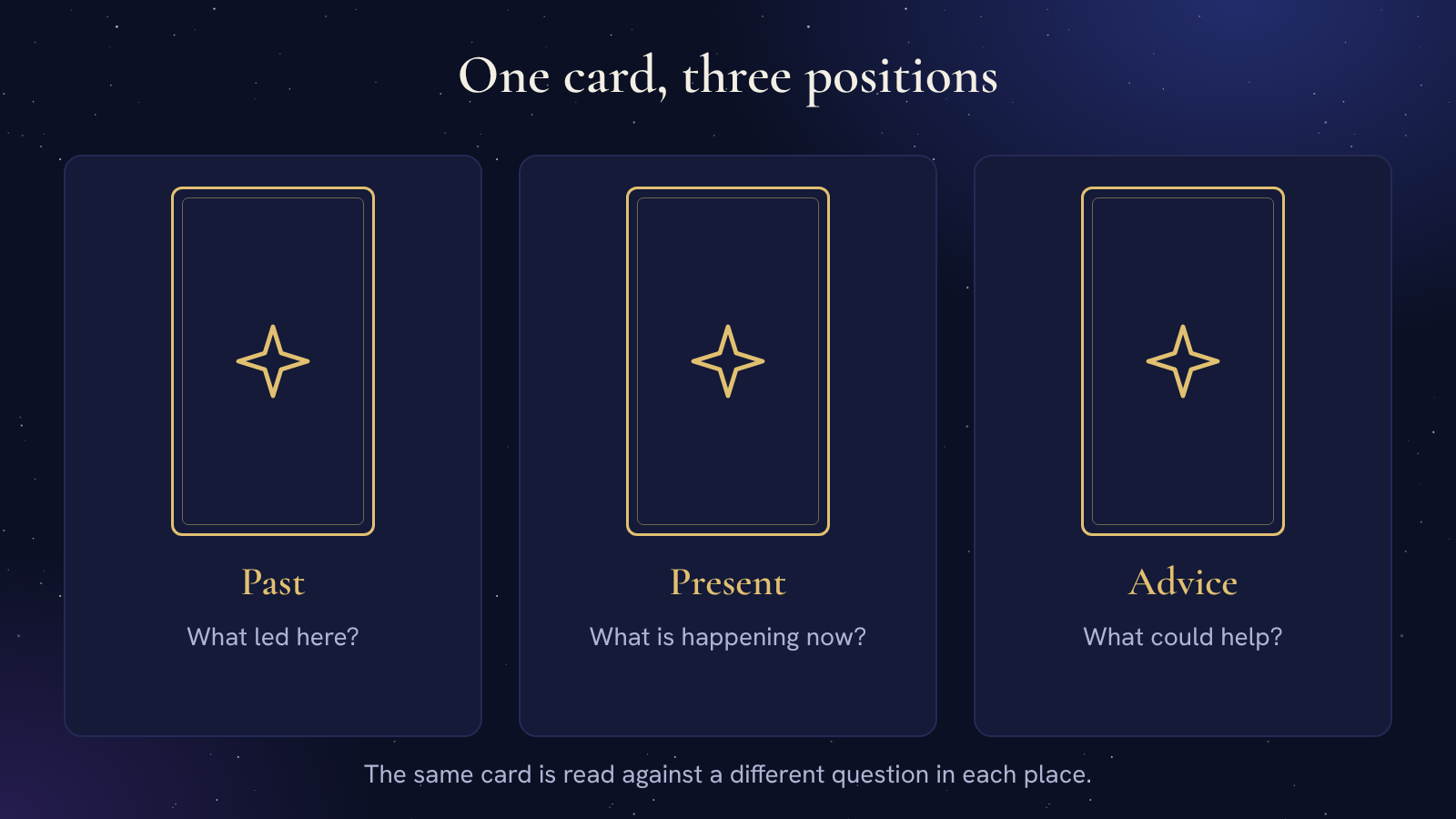
One card, three positions
Take the Three of Swords, a card showing a heart pierced by three blades. Its general sense is sorrow or a painful truth. Here is how the position shapes a reading of it:
- In a past position, it suggests a hurt that has already happened and may still be shaping things.
- In a present position, it points to something painful you are facing now.
- In an advice position, it invites you to name a hard truth rather than avoid it.
The card's picture has not changed. The question it is answering has, and so has the reading.
Common position names
Positions vary between spreads, but a few turn up again and again:
- Past, present and future. A simple timeline across three cards.
- Situation, challenge and advice. A problem-solving frame.
- You and the other person. Used in relationship spreads.
- Hopes and fears. What you want and what worries you about it.
- Outcome. Where things may head if nothing changes.
Spread guides use their own names, so always check what the layout you are using calls each position.
How to use a position when reading
Read the position's name aloud first, then look at the card. Ask: given what this position asks, what does this card suggest? If a card seems out of place, try rewording the position as a question. "Challenge" becomes "What is making this hard?" and the card often starts to make sense.
Positions also affect how you read the cards around each one. A card in an outcome position is the end of the story the others have told, so it is worth reading it last.
Positions, reversals and card order
A position works alongside other choices a reader makes, such as whether to read reversed cards and in what order to turn the cards over. Positions are fixed by the layout, but the other two are yours to decide before you begin. Our guide to reversed tarot cards covers the first of them.
Tarot has no demonstrated ability to predict events. Readings are for entertainment and reflection only, and they aren't medical, legal or financial advice.
Where to go next
For the full method, see how to read a tarot spread, step by step. If you have already laid out a spread, you can photograph it and have each card read in its position.